Category: Pokémon GO

  • Morelull Spotlight Hour (June 2024): Quick Guide

    Morelull Spotlight Hour (June 2024): Quick Guide

    As the month of June comes to a close, Pokémon GO trainers are gearing up for one last Spotlight Hour featuring Morelull on June 25th, 2024. This final spotlight of the month promises to be an exciting event, with the chance to catch shiny Morelull and earn 2x Stardust for each catch. Here is a last-minute guide to help you make the most of Morelull Spotlight Hour:

    Bonuses:
    During Morelull Spotlight Hour, trainers will enjoy the following bonuses:
    – 2x Stardust for catching Pokémon
    – Chance to encounter shiny Morelull and its evolution

    Stardust Bonus:
    Morelull is a rare Pokémon that grants extra Stardust on catch, with a base rate of 500 Stardust per catch. With the 2x Stardust bonus during the Spotlight Hour, trainers can earn up to 1875 Stardust per catch with a weather boost and Star Piece activation. To maximize your Stardust gains, consider using Great Balls and quick catch techniques.

    Potential Stardust Earnings:
    Based on catching 60 Pokémon during the Spotlight Hour, here is an estimate of potential Stardust earnings:
    – No Star Piece or weather boost: 60,000 Stardust
    – With weather boost: 75,000 Stardust
    – With Star Piece activation: 90,000 Stardust
    – With Star Piece and weather boost: 112,560 Stardust

    Mega Pokémon Boost:
    Using Mega-evolved Pokémon during Morelull Spotlight Hour can provide additional bonuses when catching Morelull. Pokémon like Mega Venusaur, Mega Sceptile, and Primal Groudon can enhance your catch experience and boost your rewards.

    Is it worth Evolving Morelull?
    While Shiinotic, the evolution of Morelull, can be viable in certain limited metas in the Great League, it is not a top-tier attacker in PvE raids. Consider your priorities before investing in evolving Morelull for battle purposes.

    Overall, Morelull Spotlight Hour offers a great opportunity to stock up on Stardust and potentially add a shiny Morelull to your collection. With the right strategies and preparation, you can make the most of this final June 2024 Spotlight Hour event. Happy hunting, trainers!

  • Vikavolt Raid: Complete Guide

    Vikavolt Raid: Complete Guide

    Vikavolt is a formidable Bug and Electric type Pokémon that evolves from Grubbin. As a tier 3 raid boss, Vikavolt is a challenging opponent that requires strong counters to defeat. While it cannot be shiny in raids, it still presents a significant challenge for trainers looking to add it to their collection.

    Vikavolt has a range of Combat Power values, from 1700 – 1781 CP at Level 20 with no weather boost, to 2126 – 2226 CP at Level 25 with Rainy weather boost. Depending on your level and the counters you have available, this raid can be soloable, but lower level trainers or those lacking ideal counters may want to bring a friend along for support.

    To help you in your battle against Vikavolt, here are some of the top raid counters to consider:

    1. Mega Blaziken
    2. Mega Charizard Y
    3. Shadow Rampardos
    4. Mega Diancie
    5. Shadow Rhyperior
    6. Reshiram
    7. Mega Rayquaza
    8. Mega Charizard X
    9. Standard Shadow Darmanitan
    10. Shadow Blaziken

    These counters have the type advantage against Vikavolt and can deal significant damage in battle. By using a combination of these counters and coordinating with your fellow trainers, you can increase your chances of success in defeating Vikavolt in raids.

    In terms of moveset analysis, Vikavolt has several fast moves, including Bug Bite, Spark, Mud Slap, and Volt Switch (a Legacy Move only obtainable via Elite TM). Its charge moves include Discharge, X-Scissor, Crunch, and Fly. Understanding these moves and how to counter them can help you develop a winning strategy in battle.

    When it comes to stats, Vikavolt has a maximum CP of 3117 at Level 40 and 3524 at Level 50. With an Attack stat of 254, Defense stat of 158, and HP stat of 184, Vikavolt is a well-rounded Pokémon that can hold its own in battle.

    In conclusion, with the right counters, moves, and strategy, you can emerge victorious in raids against Vikavolt. By utilizing the information provided in this guide, you can increase your chances of success and add this powerful Bug and Electric type Pokémon to your team. So gather your friends, prepare your best counters, and take on the challenge of defeating Vikavolt in raids.

  • Raikou Analysis for PvP & PvE

    Raikou Analysis for PvP & PvE

    Shadow Raikou has made a significant impact in both PvP and PvE battles in Pokémon GO. With its recent availability in 5-star shadow raids, trainers have had the opportunity to test its capabilities in battles. In this article, we will dive deep into the analysis of Shadow Raikou in both PvP and PvE scenarios.

    In PvP battles, Shadow Raikou shines in the Ultra League, where it fits nicely under the 2500 CP cap. With its impressive stats and moveset, including Volt Switch as the fast move and Wild Charge and Shadow Ball as the charged moves, Shadow Raikou can be a formidable opponent in battles. When comparing Thunder Shock to Volt Switch, it becomes clear that Thunder Shock offers better pacing and improved matchups in certain scenarios. However, both movesets have their strengths, and trainers may choose the one that best suits their strategy.

    In the Master League, Shadow Raikou faces tougher competition due to its lack of bulk and resistances compared to other legendary Pokémon. While it performs well in certain shield scenarios, careful shield and energy management are required for success. Overall, Shadow Raikou is a high-risk, high-reward choice in the Master League.

    In the Great League, Shadow Raikou’s CP surpasses the 1500 cap, making it ineligible for battles in this league. However, its performance in the Ultra and Master Leagues makes it a formidable contender in higher CP battles.

    In PvE raids, Shadow Raikou emerges as a top-tier Electric-type attacker, providing exceptional damage output with Thunder Shock and Wild Charge. It ranks as the best Electric-type attacker, outperforming other Pokémon in this category. With its impressive performance against legendary raid bosses such as Articuno, Kyogre, and Moltres, Shadow Raikou proves to be a valuable asset in raid battles.

    Although Shadow Raikou may not be a meta staple in every scenario, its power and versatility in battles make it a valuable addition to any trainer’s lineup. Whether in PvP or PvE battles, Shadow Raikou’s presence can turn the tide of a battle in your favor. Consider investing in powering up this legendary Pokémon for your team and experience its dominance on the battlefield.

    In conclusion, Shadow Raikou’s performance in both PvP and PvE battles showcases its strength and potential in various battle scenarios. With careful strategy and optimal movesets, trainers can unleash the true power of this legendary Pokémon and conquer opponents in battle. Whether you’re challenging other trainers in PvP battles or taking on legendary raid bosses in PvE raids, Shadow Raikou is a force to be reckoned with in the world of Pokémon GO.

  • Buzzwole Raid Counters: Max 53.chars

    Buzzwole Raid Counters: Max 53.chars

    Buzzwole Raid Counters Guide

    Buzzwole is a Bug and Fighting type 5-Star Raid boss in Pokémon GO. Defeating Buzzwole in raids requires a team of powerful Fairy, Fire, Flying, and Psychic type Pokémon, as it is 2x weak to Flying type moves due to its dual typing. The shiny version of Buzzwole will become available for in-person raiders at New York Pokémon GO Fest, and then globally from July 8th.

    Buzzwole Raid Boss CP is 44654, and it can be encountered at different CP ranges based on the level and weather boost. It is recommended to have 2-5 high-level Trainers for this raid, more if optimal teams are not available. This guide will help you understand how to defeat this macho Ultra Beast and provide information on its optimal stats, moves, and CP range.

    Best Buzzwole Counters in Pokémon GO

    Here are some of the best counters to use against Buzzwole in raids, along with their Fast Moves, Charge Moves, faints, and time to win (TTW):

    1. Mega Rayquaza with Air Slash and Dragon Ascent
    2. Rayquaza with Air Slash and Dragon Ascent
    3. Shadow Moltres with Wing Attack and Sky Attack
    4. Shadow Salamence with Fire Fang and Fly
    5. Mega Salamence with Fire Fang and Fly
    6. Shadow Staraptor with Gust and Fly
    7. Enamorus (Incarnate) with Fairy Wind and Fly
    8. Yveltal with Gust and Oblivion Wing
    9. Shadow Honchkrow with Peck and Sky Attack
    10. Mega Pidgeot with Gust and Brave Bird

    Best Mega Pokémon against Buzzwole

    Mega Rayquaza, Mega Pidgeot, Mega Blaziken, and Mega Charizard Y are excellent choices when battling Buzzwole. These Mega Pokémon provide a significant boost to Flying and Fire type attackers, enhancing the overall damage output during the raid.

    Buzzwole Moveset Analysis

    Buzzwole’s moveset includes Fast Moves like Counter and Poison Jab, and Charge Moves like Superpower, Fell Stinger, Power-Up Punch, and Lunge. In PvE, Buzzwole excels as a Fighting type due to its fast moves, while in PvP, it shows potential with its varied moveset.

    Buzzwole Stats

    Buzzwole has a high Attack stat of 236, Defense stat of 196, and HP stat of 216. It is weak to Flying type attacks but is strong against Bug, Dark, Fighting, Grass, and Ground types. With the right counters, Buzzwole can be taken down efficiently in raids.

    Conclusion

    Buzzwole is a formidable opponent in raids, especially with its unique dual Bug and Fighting typing. It can be a valuable addition to raid teams and has potential in PvP battles as well. Be sure to use the recommended counters and Mega Pokémon to achieve success in defeating Buzzwole and adding it to your Pokémon collection.

  • Add Pokémon GO Widgets to Phone for Egg, Buddy, Activity.

    Add Pokémon GO Widgets to Phone for Egg, Buddy, Activity.

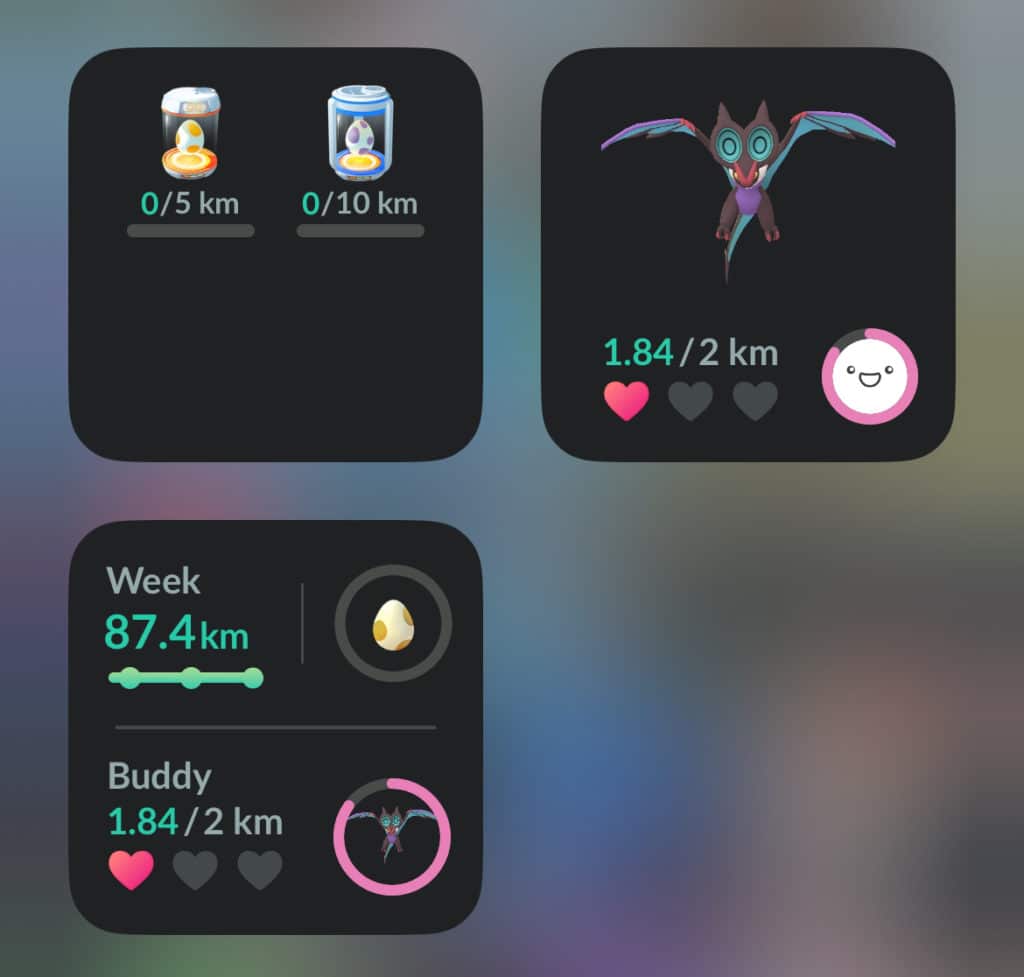
    As a Pokémon GO player, you may already be familiar with the Buddy and Egg widgets that allow you to keep track of your progress in the game. But did you know that Niantic has recently introduced a new Activity Summary Widget that provides even more information at a glance? In this article, we will guide you through the process of adding these widgets to your phone, whether you’re using an iPhone or an Android device.

    Firstly, let’s clarify what a widget is. A widget is a quick way to access specific information from an app without having to open the app itself. In the case of Pokémon GO, widgets allow you to see your Buddy Pokémon status, Buddy Candy distance gauge, egg hatching progress, and weekly walking summary right from your home screen.

    If you’re an iPhone user, adding these widgets is simple. From your Home Screen, tap and hold a widget or an empty area until the apps jiggle. Then, tap the Add button in the upper-left corner, select the Pokémon GO widget, and tap Add Widget. Finally, tap Done to save your changes. You can also add Pokémon GO widgets to your Today View by swiping left from your home screen and following the same steps.

    For Android users, the process is slightly different. To add a widget, touch and hold an empty space on your Home screen, tap the Widgets icon, and then tap and hold the Pokémon GO widget. You can then slide the widget to where you want it on your screen and lift your finger to place it. If you want to resize the widget, touch and hold it on your home screen until an outline with dots appears on the sides. You can then drag the dots to resize the widget to your liking.

    With these widgets added to your phone, you can easily keep track of your Pokémon GO progress without having to open the app every time. Whether you’re aiming to hatch eggs, earn Buddy Candy, or reach your weekly walking goals, these widgets provide a convenient way to stay up to date with your in-game activities.

    So why wait? Add the Pokémon GO Egg, Buddy, and Activity Summary Widgets to your phone today and take your Pokémon training to the next level!

  • Pokémon Sleep: Growth Week Event.

    Pokémon Sleep: Growth Week Event.

    Pokémon Sleep has announced a new event called Pokémon Growth Week, focused on helping trainers grow and level up their Pokémon through the power of sleep. This week-long event offers special bonuses to enhance your sleep experience and improve your Pokémon’s abilities.

    The Pokémon Growth Week event will take place from Monday, July 1, at 4:00 a.m. to Monday, July 8, at 3:59 a.m. This event will be active in all research areas, providing trainers with the opportunity to maximize their sleep EXP and candies during this period.

    During Pokémon Growth Week, trainers will enjoy the following bonuses:
    – Helper Pokémon Sleep EXP ×1.5
    – Candies gained from the first sleep research of the day ×1.5

    It is important to note that each day of Pokémon Growth Week rolls over at 4:00 a.m., and the candy bonus only applies to the first sleep session of the day. Event bonuses are applicable only to sleep data tracked during the event, so be sure to report your sleep data in a timely manner to receive these benefits.

    To further enhance your Pokémon’s growth during the event, trainers can use different types of incense such as Growth Incense, Luck Incense, Recovery Incense, Focus Incense, and Friend Incense. Using a Growth Incense during the event will boost EXP gains, allowing trainers to earn up to 300 EXP per sleep session with a maximum sleep score.

    Trainers are advised to aim for one long sleep session per day to fully optimize the bonuses offered during Pokémon Growth Week. By strategizing your sleep patterns and utilizing the event bonuses effectively, you can help your Pokémon reach new levels of strength and power.

    Overall, Pokémon Growth Week is a fantastic opportunity for trainers to focus on their Pokémon’s growth and development through the power of sleep. With enhanced bonuses and special rewards available during this event, now is the perfect time to engage with Pokémon Sleep and level up your favorite Pokémon like never before. Get ready to embark on a journey of growth and discovery with your Pokémon during Pokémon Growth Week!

  • Community Day Typhlosion PvP Analysis: Shocking Edition

    Community Day Typhlosion PvP Analysis: Shocking Edition

    Pokémon Trainers, prepare to be electrified as we delve into a PvP analysis of the star of this month’s Community Day classic, Cyndaquil, and its final evolution, Typhlosion. As a lover of all things fiery and a fan of Typhlosion myself, I am excited to explore its PvP potential in depth.

    When it comes to Typhlosion’s PvP prowess, two key moves stand out: Blast Burn, its Community Day move, and the newly acquired Thunder Punch. While Blast Burn is a familiar move for Typhlosion, Thunder Punch adds a new dimension to its battling capabilities, providing both a reliable bait move and decent coverage. The combination of these two moves elevates Typhlosion’s performance in PvP battles.

    Despite its newfound potential, Typhlosion remains somewhat of a spice pick in PvP due to its inherent frailty. Thunder Punch, while a crucial addition to its move set, could benefit from a slight buff to further enhance Typhlosion’s effectiveness in battles. However, for trainers who do not already have a Typhlosion with Blast Burn saved up, this Community Day presents an excellent opportunity to add one to their roster.

    In terms of Typhlosion’s stats and moves, its impressive Attack stat sets it apart from other Fire-type Pokémon in the Great League, Ultra League, and Master League. However, this high Attack stat comes at the cost of low defense and HP, making Typhlosion a glass cannon in battles. Its pure Fire typing gives it resistance against several types, but weaknesses to Ground, Rock, and Water types pose significant challenges in PvP encounters.

    When it comes to fast attacks, Incinerate stands out as the most effective option for Typhlosion, providing optimal damage output and energy generation. In charged attacks, Blast Burn is a vital move for Typhlosion, offering high damage per energy ratio. Thunder Punch, while a valuable addition, outperforms Solar Beam in most scenarios due to its lower energy cost and effectiveness against a wider range of opponents.

    In the Great League, Typhlosion excels against Steel, Ice, Grass, Bug, and Fairy types, showcasing its versatility and strength in battles. With a shield advantage, Typhlosion can defeat bulky Pokémon like Cresselia, Feraligatr, and Mantine, further solidifying its position as a formidable contender in PvP battles.

    Moving up to the Ultra League, Typhlosion’s increased bulk and expanded list of opponents make it an even more potent force to be reckoned with. While Typhlosion struggles against Water, Fairy, and Dragon types commonly seen in this league, its ability to triumph over Steel and Ice types showcases its versatility and adaptability in battles.

    In the Master League, Typhlosion’s stats prove to be less competitive compared to the myriad of powerful Pokémon present in this league. Trainers are advised to avoid using Typhlosion in Master League battles due to its limitations in terms of stats and matchups.

    In conclusion, Typhlosion’s PvP potential is on the rise with the addition of Thunder Punch and its signature move, Blast Burn. While it may not dominate the meta, Typhlosion’s unique strengths and diverse move set make it a valuable asset in PvP battles. With strategic maneuvering and careful team composition, Typhlosion can shine as a formidable contender in the world of Pokémon PvP. So, trainers, prepare to ignite the battlefield with Typhlosion’s fiery presence and electrifying moves!

  • Achieve Eeveelution Tops Through Party Play Challenges

    Achieve Eeveelution Tops Through Party Play Challenges

    Trainers who are looking to add some Eeveelution flair to their wardrobe can now do so by completing Party Play Challenges in Pokémon GO. By joining a party and fulfilling the task of catching a certain number of Pokémon in Ultra Balls, players have the chance to receive a T-Shirt featuring one of the following Eevee evolutions: Espeon, Umbreon, Leafeon, Glaceon, and Sylveon.

    To efficiently farm these Eeveelution tops, trainers can follow these steps:

    1. Join a Party: By joining a party or completing an existing Party Challenge, players have the opportunity to receive a new task that rewards an Eeveelution themed T-shirt for free. The task will require catching a specific number of Pokémon in Ultra Balls, with the number varying based on party size.

    2. Catch Pokémon in Ultra Balls: Depending on the size of the party, players will need to catch 50, 75, or 100 Pokémon in Ultra Balls to complete the task and receive the Eeveelution T-Shirt.

    3. Rejoin for Efficiency: To maximize the chances of receiving the Eeveelution T-Shirt task, players can leave the party and rejoin until they obtain the desired task. It may take around 50 rejoins to receive a single T-shirt task, so patience is key.

    4. Time Limit: Players have a maximum of 3 hours to catch the required number of Pokémon to complete the task. Make sure to allocate enough time to achieve this goal within the time limit.

    5. No Need to Complete Other Tasks: Players do not have to finish the Party Play research task “Welcome Party” in order to receive the Eeveelution tops. Focus on completing the specific catching task to earn the T-Shirt.

    By following these steps, trainers can acquire all of the new Party Play Eeveelution themed T-shirts quickly and add a stylish touch to their Pokémon GO avatar. Happy hunting!

  • Hot Feet: Event Recap

    Hot Feet: Event Recap

    The Scorching Steps Event in Pokémon GO has kicked off with a few new features, including the addition of shiny Larvesta and various event-specific Pokémon hatching from eggs of different distances. Despite the lack of featured event spawns and an increased chance of hatching Larvesta or its shiny variant, there are still some notable aspects of the event that are worth exploring.

    The event, starting on Friday at 10:00 AM local time and ending on Tuesday at 08:00 PM, offers some bonuses that players can take advantage of. These bonuses include 2x Candy from hatching eggs, reduced egg hatch distance when using incubators during the event, and increased chances to encounter and hatch shiny Slugma, shiny Litleo, and the debut of shiny Larvesta.

    One of the highlights of the event is the return of Yveltal in 5-star raids, offering players a chance to battle and potentially catch this legendary Pokémon. While Yveltal may not have its signature move, Oblivion Wing, its performance in PvP has been analyzed, showing that Focus Blast could be a stronger choice in battles. Additionally, Yveltal’s role as a raid attacker is emphasized, making it a valuable addition to your team.

    Another Pokémon to look out for during the event is Volcarona, which can be hatched from eggs. While Volcarona may not be the most impactful in PvP or PvE battles currently, its potential future movesets could make it more relevant.

    Litleo and Pyroar, two fire-type Pokémon available through hatching during the event, have mixed performances in both the Great League and Ultra League. While Litleo shows promise in certain matchups, Pyroar may struggle to make an impact in the current meta.

    Chandelure, another Pokémon available through hatching, is highlighted for its potential in PvP battles, where it can deal significant damage with its ghost-type moves. In PvE, Chandelure ranks as the top electric-type attacker, making it a valuable addition to raids.

    The event also features other Pokémon such as Turtonator, Litwick, and Raikou, each with their own strengths and weaknesses in battles. Overall, the Scorching Steps Event is rated 3/10, with some aspects of the event falling short of expectations. Despite this, players can still find value in participating in raids, hatching eggs, and collecting candies during the event.

    In conclusion, while the Scorching Steps Event may lack some of the excitement of previous events, there are still opportunities to engage with new Pokémon, participate in raids, and enhance your battle strategies. So grab your Poké Balls and get ready to explore the scorching steps of this event in Pokémon GO!

  • The Stylish Cyndaquil Design.

    The Stylish Cyndaquil Design.

    Good day, Pokémon Trainers! Have you ever noticed how certain events in Pokémon GO give special attention to a single Pokémon or the community itself tends to hype a new Pokémon up? Have you ever wondered why this Pokémon specifically and what its origins are?

    Well, that’s where the Dashing Design series comes in! I’ll be your guide as we take a look at the franchise history, concept, and potential design inspirations of specific Pokémon. And this time, the fire-quilled starter from Johto returns for this month’s community day classic. So let’s take a look at the newly buffed starter from Johto, Cyndaquil!

    Franchise History
    As mentioned in the intro, Cyndaquil is a starter/ first partner Pokémon from Johto. This also means it’s one of the oldest Pokémon covered here in Dashing Design. To be more precise, Cyndaquil is a Pokémon introduced in Generation Two. Generation Two encompasses the Pokémon Gold, Pokémon Silver, and Pokémon Crystal lineup of video games. With Gold and Silver later getting remakes in Generation Four with Pokémon HeartGold and Pokémon SoulSilver. Cyndaquil reprises its role as the Fire type starter in these games.

    Being one of the starters of the very second generation of Pokémon, of course, Cyndaquil appears in many places other than the mainline games as well. As far as the anime series are concerned, the protagonist, Ash catches a Cyndaquil in Episode 141 of the original series and it becomes a permanent part of Ash’s team for the remainder of his Johto journeys. One of the seasonal protagonists other than Ash also ends up with a Cyndaquil. As the female protagonist, Dawn, also hatches a Cyndaquil from an egg in the first special episode of Pokémon the Series: Diamond and Pearl. Not only that, in The Legend of Thunder!, a part of a side series called Pokémon Chronicles, one of the protagonists, Jimmy has Cyndaquil’s evolved form, Typhlosion, as his partner Pokémon.

    Cyndaquil also makes appearances in various Manga. This includes Exbo the Cyndaquil, who appears in the popular Pokémon Adventures manga series. Other than these, Cyndaquil is also the starter in a more recent mainline game, Pokémon Legends: Arceus, alongside the 7th Generation starter Rowlett and the 5th Generation starter, Oshawatt.

    Etymology and Design

    Etymology
    Cyndaquil’s name is decidedly simple. It’s a combination of “Cinder” (Typically meaning partly burnt coal or wood) and “Quill” (A type of spiked protrusion some animals have on their back). Thankfully Cyndaquil’s Japanese name goes a bit further. It’s Hinoarashi. Very likely a combination of Hi (Meaning Fire) and Yama-Arashi (Meaning Porcupine). Hi No Arashi, read separately like this can also mean “Storm of Fire” or “Storm of Flame”. Rather directly referring to its pure Fire typing.

    Design
    On first impression, Cyndaquil looks like some kind of small, four-legged mammalian animal. This assumption would be accurate, as about every Pokédex and other materials refer to Cyndaquil as the “Fire Mouse” Pokémon. Which is a name shared by a Chinese folklore creature. But hold on, as we saw in the etymology section, Cyndaquil’s Japanese name seems to be taken partly from the Japanese name for porcupines. So which one is accurate?

    Well, it might actually not be a problem or a contradiction in the first place. Porcupines and mice both fall under the rodent category and “mouse” is a common enough word where it is sometimes used to mean rodent. So yes, Cyndaquil is a porcupine. This is made more obvious when Cyndaquil’s back is lit up on fire.

    Cyndaquil’s back can light up on fire like this. And when it does, it looks similar to the spiky quills that can be seen on porcupines. Granted, porcupines aren’t the only animals to have quills on their backs. As any Sonic fan can tell you, Echidnas and Hedgehogs can have them too. To me, Cyndaquil’s snout definitely looks akin to those seen on Echidnas. So they could be a potential inspiration.

    But the main inspiration, I think, is definitely porcupines. Cyndaquil even has different colored fur on its front and back. Similar to how certain porcupine quills start with darker tones but become more white-colored the further up the tip you go. Giving them a sort of dual coloration. Though to be fair, the same can often be seen in hedgehogs as well.

    An additional Note
    Despite their imposing appearance, porcupines are herbivorous animals. And even echidnas and hedgehogs really only pray on small critters, such as insects. The quills mostly exist to deter predators. When they feel threatened, these animals extend their quills out and often roll into a ball. They do so to scare away predators and avoid direct confrontations.

    This is actually properly represented in both Cyndaquil’s Pokédex entries and moves. It can naturally learn moves such as Defense Curl and Rollout in the mainline games. And its Pokédex entries make mention of its timid nature and how it curls up into a ball. Just for one example, here’s the Pokémon Gold Pokédex entry:

    “It is timid, and always curls itself up in a ball. If attacked, it flares up its back for protection.”

    Quilava And Typhlosion
    Just like every Dashing Design prior, our look into Cyndaquil isn’t complete without taking a look at its evolutions. So let’s take a look at:

    Quilava
    Cyndaquil’s evolution into Quilava may seem standard at first. It grows larger, now having a more elongated figure. Its head is also now less pointed, and more rounded. However, these changes actually seem to hint at a more significant change in Quilava’s design inspirations from that of Cyndaquil.

    Quilava now looks more similar to a Mustelid. Further enhanced by the fact that the flames on its back have now concentrated on its head and back. As such it looks more like a tuft of fur and a tail respectively. Rather than quills.

    But anyways, many long, carnivorous, hunting animals make up the Mustelid family. This family includes the likes of ferrets, badgers, and weasels. Otters also fall under this category. Which would make the previously mentioned Oshawatt line a relative to the Cyndaquil line.

    Another interesting thing to note about Quilava is that while it keeps the “Quil” part of Cyndaquil’s name, the Cinder has now been replaced with Lava. This is true for its Japanese name as well. Magmarashi keeps the “Arashi” but removes “Hi” with Magma. To understand why that is let’s move on over to the final stage in the Cyndaquil line:

    Typhlosion
    The change from Quilava to Typhlosion is even more subtle. It still largely looks like a Mustelid. Its body is now larger, more triangular and sharper, more ferocious looking overall. Its front legs are now more claw-like to add to the ferocity. And the flaming tail on its back as Quilava has now been replaces with a tuft that looks like an actual tail. Now leaving an explosive flame only at the back of its neck.

    So…what’s up with that? The flames certainly don’t look like quills anymore. Well, the answer lies in Typhlosion’s name. Typhoon + Explosion. A natural calamity and a burst. The same is true for its Japanese name Bakphoon as well. The meaning is the same. To explain why this is relevant let me provide you with another dex entry. From the Pokémon Silver Pokédex:

    “It has a secret, devastating move. It rubs its blazing fur together to cause huge explosions.”

    This secret move is referring to the move: Eruption. As in a volcanic eruption. That is what the explosion in its name comes from. And why Quilava’s name refers to lava. The flame on the back of Typhlosion’s neck is meant to represent a volcano erupting. Typhlosion is a walking calamity!

    Conclusion
    And there we go! Honestly, I’m super happy to do this one as Cyndaquil is one of my favorite starters. And really, one of my most favorite Pokémon in general. However, I tend to think of early generation Pokémon as having rather clear and direct inspiration. But with Mareep and now with Cyndaquil, it’s very interesting to see how even earlier on in the franchise’s history, they were blending in elements from multiple sources.

    Cyndaquil goes from a timid porcupine with a cinder of a flame to a ferocious mustelid with the power of a volcanic explosion! Quite fitting for a Fire starter meant to follow in the footsteps of the mighty Charizard. Oh, and if you want to read more about Typhlosion from Hisui, we have that covered as well. And this is why, Cyndaquil’s design, is quite dashing!

    Goodbye for now, Pokémon trainers. Priom-out!